Episode Transcript
TRANSCRIPT:
FAWN: [00:00:00] if you are also missing the village, you know, family next door, grandma living on the same street, that bonding, that group, loving support that is there in a village. If you're also missing that, this is a reminder that this is not the end of friendship. This is the beginning of honest friendship, and we're going from one
thing to another, meaning things are shifting and we're in the midst of it.
Welcome back to our Friendly World everybody. Hi.
MATT: Hello.
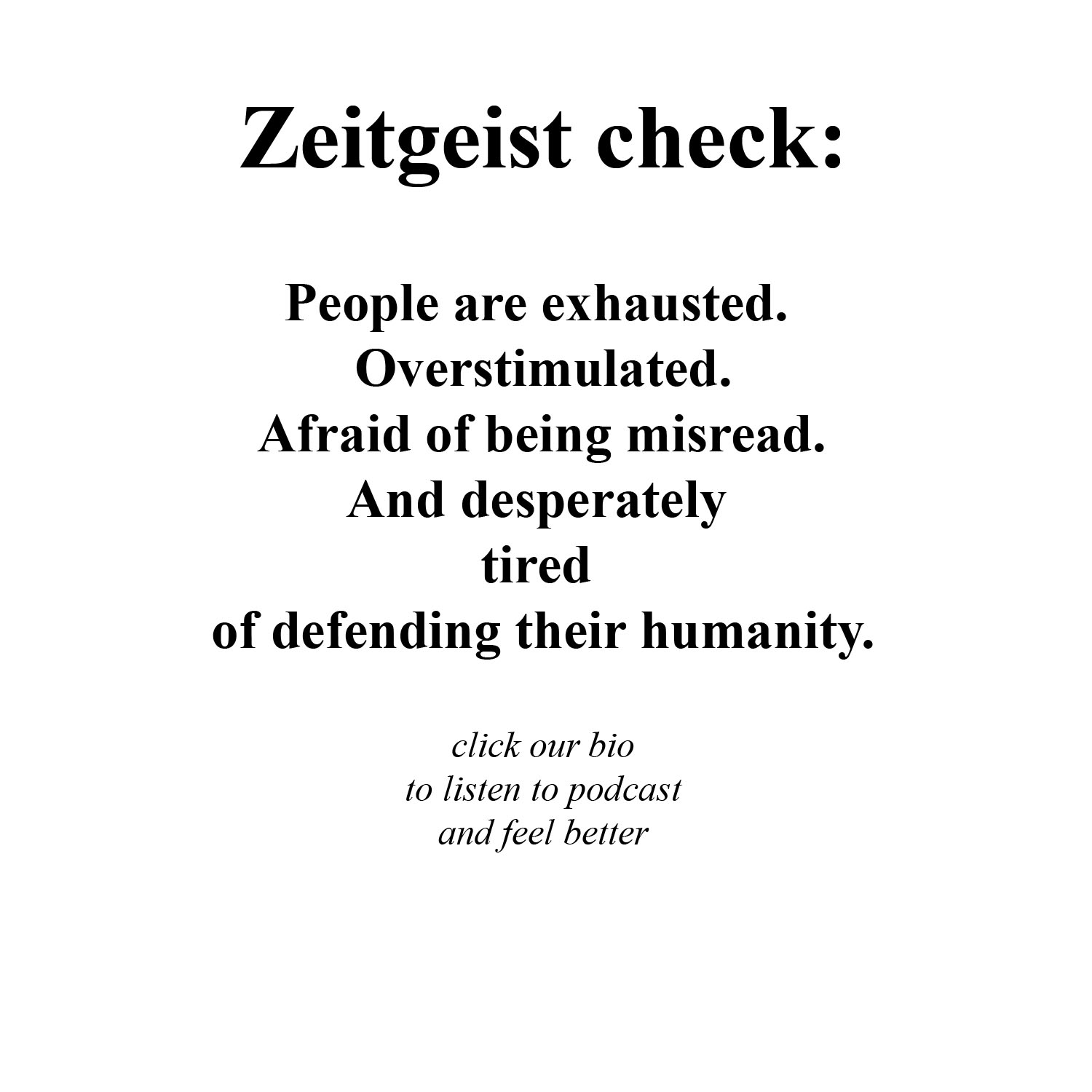
FAWN: let's do a zeitgeist check. Are you ready? I'm just going to be a cultural mirror. Alright. Here's what I think is happening. You ready?
MATT: Okay.
FAWN: I think people are exhausted, overstimulated, afraid and
tired, desperately tired of defending their humanity.
MATT: That's a lot to unpack in there.
FAWN: Should I just go through everything I've been thinking about
MATT: that's probably gonna be the right thing to [00:01:00] overstimulated. I mean, I'm absolutely with you. I'm, I'm, I'm there. Exhausted. Yeah. Absolutely. Defending our humanity.
FAWN: Oh, honey, I feel this all day, every day. Especially with our kids, because, it seemed like we were on the same page and then all of a sudden I'm looking at things and I'm like, hold on a minute. Whoa, hold on. This is actually what's happening and I feel like before I have to say anything, there's a whole list of things I have to like, you know, those, uh, commercials where like the lawyer comes in and says all the things that could go wrong and all the things that you need to watch out.
I feel like there should be a disclaimer for every time I have to express anything. It's exhausting, and I think that's what, well, I'll, let's just, let's get into, let me just start, okay. Okay. And then we'll get into it. So, question
why, why is everyone explaining themselves all the time? I don't think we speak from conscience anymore. We speak from the fear of [00:02:00] misinterpretation. This happens to me all the time when I'm talking to my best friends. I know that I am evolving and I'm changing. I'm growing in certain ways. Mm-hmm. And I always think of how, what I'm about to say is going to get misinterpreted because I know how they feel and I know they know how I
MATT: used to
FAWN: feel used to feel.
But now I have maybe more information or something changed. And because we're not together all day every day, or we don't even talk to each other every day.
MATT: Mm-hmm.
FAWN: There's a lot that is happening in such a fast way that they just don't know. So a lot can be completely misinterpreted. Right. So that's exhausting.
there's a whole lot that's playing and I found some terms to describe it. It's performative morality. like we're [00:03:00] using social media as a courtroom. We're living in anticipation of being called out all the time. No matter what you are, even if you're not an influencer just being called out as a mom or as a friend or as a human being.
There's this anxiety of preemptive justification
MATT: and it feels like there's gonna be a damnation if you misspeak
FAWN: Yes
MATT: too. And you're never gonna be able to say, oops, I'm sorry, and Have that accepted,
FAWN: right? Yeah, yeah. Or, oh, wait a minute. I see what you're saying. Huh? Yeah. Okay. Or, yeah, I see what you're saying.
No, this is what, this, I don't think so, you know?
MATT: Right. I mean, I could say I hate Chinese.
FAWN: No, don't say that. Say something else.
MATT: Well, I was gonna go to food,
FAWN: say Chinese food, then say it again.
MATT: Well see. That doesn't work then. But if I say I hate Chinese people may [00:04:00] assume, I mean culture, people may assume, I mean, um, you know them as a race, people may assume, I mean, the government people may assume there's a lot of assumptions people can make depending on where their headspace is.
So I'd literally have to say something like I hate all Chinese food that has this sauce on it or whatever, and it's like, oh my God, I just played through 27 scenarios to get to this point. I'm
exhausted.
FAWN: And I just preempted you by saying, oh, don't say that. Don't
MATT: say that.
FAWN: Exactly.
MATT: And so everybody's looking to make sure, 'cause you know, certainly we don't wanna say anything that can get misinterpreted, but we live in such a soundbite, kind of ready society.
FAWN: And how is that communication, we're not communicating anymore. It's like we're constantly defending ourselves. That's all it is.
It's, and that's why it's a perfect description is like, it's a courtroom,
MATT: right. [00:05:00]
FAWN: Everything is a courtroom now,
MATT: and we're gonna break you down right there on the stand, like on Perry Mesa.
FAWN: Yeah, I mean, I heard this a long time ago when once in a while I was in the kitchen and the TV was on, and I would hear Wendy Williams speak about receipts. Have your receipts. But it's true, like I think now more than ever, we live in a world that demands receipts, the pressure to prove your intentions.
the moment you stop explaining yourself, why are we overexplaining when we don't, when we don't feel safe? , The relief of letting There's such relief when you just let a misunderstanding exist. Oh, well. You know, it's dangerous. We can't really do that, but, and we can't rely or can we rely on self-trust as a form of a boundary.
All this creates creative, exhaustion, .
It, it, it [00:06:00] requires a lot of emotional honesty. Can we let life speak instead of forcing insight? Can we just be and live
MATT: and can't we just laugh at ourselves?
FAWN: But just like, have that be as an example instead of saying like, I've, I'm noticing that um, I've been doing this a lot more the last few years with the kids, but, and now I'm just telling myself, stop trying to explain everything.
Mm-hmm. It's exhausting for me and it's probably exhausting for them 'cause they have to pay attention all the time to what I'm saying, right? Like everything is a teaching moment. You know, from every, when we're, when I'm driving and I see something, I'm like, okay, kids, when you drive, I want you to look out for this.
When you're walking, I want you to look. It's a lot of being hyper aware and, on guard about everything.
MATT: Mm-hmm.
FAWN: It's also exhausting to like, bring it up and say it, like to talk. It's exhausting.
So [00:07:00] a part of me has been trying to just let go and just live. And I think that quiet living, that quiet walking is example enough in this very loud world. So if you're just as loud as everything else, then you're not heard.
MATT: Right.
FAWN: It, it's all tricky. Like, everything I'm gonna say today is tricky because like, for example, silence.
I used to say I hate it when people are silent because to me that is, rejection. The rejection of like, let's just say like I would open up to someone and tell them something very vulnerable and they would say nothing. And I would wait. 'cause I'm like, okay, maybe they're thinking about it.
And they would say nothing forever. Not then, not a day later, not a week later, not months later. Just ignored. Uh, that's what it is. I felt like it was ignored.
MATT: Mm-hmm.
FAWN: But now I'm gonna say that silence is really important because we're so [00:08:00] exhausted and everything is loud. Like I just said,
However, in certain situations. While everyone is yelling about some that one thing for you to quietly just live it, live the proper way, tend to the proper way, speaks better to me.
So again, I'm here I am prefacing what I'm gonna say, which is exhausting. But I feel like I have to do that as a podcast host. Just just know that it's a line, it's a fine line, right. Matt? How do I explain that, pat?
MATT: It is, unfortunately, in so many instances, it feels like people are defined by one thing they do on that one day.
And, to some extent, I get both sides of the argument. It's very tricky. Like if you're 17 and you pull a real boneheaded move and you're 50 now and you're still being judged on that move. Is it [00:09:00] fair? Is it not fair, is it, and I can see both sides of it. And that's where it all gets weird.
And that's why people feel the need to defend. People feel feeling the need to overexplain and analyze means you're moving from fear and not from love.
And if we move from fear, we live, we're living from fear and that's uncomfortable.
FAWN: and talking about how all of this requires so much effort and emotion. It's emotional labor. I have a feeling all these words I'm going to be using, I'm gonna be embarrassed about in a few years. You know how you say, say a word, and then. You think you've made it up or something, and then years later it's totally, hijacked.
MATT: Right.
FAWN: And you're embarrassed. It's co-opted by that. You ever spoke that way?
MATT: It's co-opted by the extreme. This would
FAWN: the Yeah, exactly. That guy
MATT: over there.
FAWN: Oh my God, honey, I, I, I've been, I night, I've been thinking about our previous podcast like. Years ago, and I'm like, the things I've said now, I would not use those [00:10:00] words because it, it has been co-opted.
And I'm like, oh my God, that's not, that's not what I meant. That's not what I meant, meant
MATT: it's not in that context anymore.
FAWN: Can't say anything anymore. So anyway, so everything we're talking about actually came from a text I received yesterday from a friend. And I was just, I was feeling so much guilt for responding the way I had to respond to her.
That it just, it, it, it started to break me that I was like, why? I'm so unfriendly, I'm this and that and it, and I had to really sit down and think, no, I am not, this is a valid, huge list of reasons why I feel this way about her. And like she wanted to come visit. We haven't seen each other in like six years she's one of those friends that has been my friend for a very long time.
MATT: Mm-hmm.
FAWN: But there are certain things that bother me. I feel [00:11:00] unheard by her a lot, right. And like, and then when there are visits, I feel infuriated on the inside because she's not a good guest.
So we've moved, she hasn't seen our place. It's, I feel bad for not having her stay with us. Plus it is a very small house, but whatever. It's just, if you're not a good guest, it doesn't work. And part of being a good guest is asking the person, Hey, what days would be good for you for me to come visit? But she just gave me the three days she wants to be here.
And I'm like, ouch. Um, o. Those are really tricky days. We're working. Can't take time off.
MATT: Right.
FAWN: It's not gonna work. And, and I may be out of town at the same time for work. So anyway, so she text me back and to me it felt like she was, um, saying, oh, I know you're lying. Um, so basically you just don't want a visitor.
So, but that's [00:12:00] cool girl. I'm like, first of all, I don't talk to me like that. Like girl, I haven't spoken that way in 30 years. , But again, she wasn't hearing me. I said, those are really bad dates, like we're working. But
MATT: now you're, you're still explaining
FAWN: I'm mad.
MATT: You're know,
FAWN: you're still
MATT: explaining. I feel bad for you.
You're, you're exhausting. I'm yourself
FAWN: and I'm exhausting the whole family. 'cause I keep talking about it. 'cause I feel guilty. And the thing is that once I told her. In two sentences, short sentences. Oh, those are really, really tough days because of work.
MATT: Mm-hmm.
FAWN: And I may be out of town, and then she comes back with that message.
MATT: Right.
FAWN: And I just don't wanna reply. And I'm thinking about, well, how do I reply to this because you're not listening to me. So, I'm choosing not to reply.
MATT: Well, happy St. Patrick's Day. That's how you reply.
FAWN: It is just, um,
MATT: IE you'll wait a month and, [00:13:00] you know,
FAWN: just
MATT: send
FAWN: her a Yeah, I hear you
MATT: Pithy text.
FAWN: I, I thought about ret texting those two short sentences again, but I'm like, no, no reply.
And that right there is a reply. It's perfectly acceptable as far as I'm concerned, because you're not gonna hear me either way. And I, and we're gonna get into a confrontation. There you
MATT: go.
FAWN: So I think in that case, when there's silence there, it's not bad. What do you think?
MATT: Well, allow me now to defend. No, I'm kidding. Uh, see, I don't wanna overanalyze. What I just wanna say is. I can remember going to see my friend Virginia and a while ago, I stayed with her for a, a few days
FAWN: I was with you.
MATT: No, no, no. This was, this was before. But I remember going, she, she's a bus driver and I remember going on one of her routes with her because she had to go to work and seemed like an okay thing to do.
And, you know, I just kind of go with the flow. So I think about that. I think about my [00:14:00] buddy Jim, if I was to go where he is for any length of time, I'm not a hundred percent sure we would connect. And if we did, it would probably only be for like a dinner or something.
FAWN: Mm-hmm.
MATT: Because he's got a family and obligations and a job and blah, blah blah.
And I've got a family and obligations and a job, blah, blah, blah. So, you know.
FAWN: Yeah. Like, so if you said, Hey, I'm coming over there. 'cause it's in another state.
MATT: Right.
FAWN: And I'm gonna stay with you like, oh my God. That it doesn't work. It's
MATT: a big presumptuous. Oh my gosh. And, and that I, it feels like, would never work with Stevie.
So I wouldn't even suggest
FAWN: it presumptuous. That's the thing people presume, assume too much. Like, I don't think she understands that I work. I must have all the time in the world, you know?
MATT: Well, they don't understand our point of view because we also, I was thinking about it. We have a, we have a neighbor and her son completely beat on our front door.
FAWN: Mm-hmm. [00:15:00]
MATT: And it, it was scary. It sounded like, you know, we were about to hear whos,
FAWN: well he's profoundly autistic,
MATT: but we, we, I was what, the first time it happened, I assumed that was somebody super pissed. Oh,
FAWN: every time
MATT: super pissed at me. Every time. Who was gonna come in and do bad things to me?
FAWN: Every time.
MATT: Scared the bejesus out of the whole house.
FAWN: Yes.
MATT: Our neighbor doesn't understand that.
FAWN: Nope.
MATT: Lacking the context. Thinks we're being, mean
FAWN: and, yeah. Yeah. How dare you not understand? I'm like, oh my God, please. So, anyway, but see, there's this emotional labor, a huge emotional labor of being misunderstood. So when you try explaining yourself, it becomes unpaid emotional labor.
MATT: Right? As opposed to just put yourself in the other person's shoes for a minute.
FAWN: Mm.
MATT: And try and figure out perhaps why they're annoyed with you.
FAWN: And we did this, we tried to go back and forth, but at a certain point, [00:16:00] choosing not to respond. Is the way to go. Not everything deserves a reply. Not a, a non-response is different from avoidance. Right?
MATT: Can be.
FAWN: So like when she responded back to us, like how we're so incredibly awful for behaving that way.
Like by like saying, Hey, stop going in our mail. It's against the law, and don't go in our mail and stop pounding our door and throwing our mail on the ground. You know, she. Then she came with fighting, like fighting words,
MATT: right?
FAWN: Fighting stamps.
MATT: And it never got it. It never, fortunately we never escalated her all the way out, but we got things got more than a little heated,
FAWN: and it could have gotten really bad for her because the mailman noticed what was happening.
He's like, look, I can turn him in. And that's a, it's a federal offense. We're like, no,
MATT: but welcome to the emotional labor of having to explain that.
FAWN: Oh my God. So now another layer. Right, right. Another, so, [00:17:00] let me just conclude my thoughts and then we can wrap it up or like, actually I wanna hear more about what you think, Matt.
So in conclusion,
okay. You know, you guys know how, I hate the word busy. I will never say that word. Like if you ask me, Hey, whenever you wanna do this, even with my, uh, with the text, I didn't say I'm busy. I said, I'm working , and that's what I say. I, I hate it when people say I'm busy because it, to me, it's an f you word.
. So these are the things that are exhausting to say and to hear, and kind of like, busy. A few cultural wrongs that I've noticed. So getting back to this performative morality. People before they talk, and I'm talking not even online, not even at work, I'm talking like amongst friends.
I've been doing this, people adding disclaimers before saying something human, for example, just to be clear, [00:18:00] I fully support dot, dot, ... And then you get into what you're saying, i've had to do this so much the past few months, or I want to acknowledge my privilege before I say this, dot, dot, dot.
You're feeling guilty about whatever you have or whatever you are, and you wanna make sure that the other person knows that you're not some, put a label on it, whatever. Before you say your opinion, long prefaces, they're meant to cement this moral safety before a simple opinion.
We can't have opinions anymore. Public statements, it's kind of like getting on a soapbox, like public statements that sound less like belief and more like insurance. Like we have car insurance, health insurance, we have insurance for everything, and now we need insurance for communication. So has morality become something you display instead of something you live quietly?
Do we speak? Are we speaking [00:19:00] from conscience or from the fear of having whatever you say or think, be this huge misinterpretation.
And here are the things we do, rewriting, texts, or even speeches like going over in your head over and over so many times before you actually say them or send them over explaining boundaries so they don't sound like rejection. Oh my God, I do this all the time. I do it now to like people, I don't know, there's so many people that wanna be on our podcast and I have to explain, right now we're not doing guests.
We haven't had a guest on in over two years. And I feel like I have to explain why. Ugh. It's exhausting. But that's just one tiny example. And I don't know if you all do this, but like saying yes while already preparing the apology for saying no later. I noticed you pointed that out when our kids were babies.
Like I didn't wanna be harsh with them, [00:20:00] so I, I did that. You said, I sounded like a hotel concierge or something like, you know, like someone who's not supposed to say no to their client, but you're, but then you're explaining why this is not a good idea. You know what I'm saying? Instead of like, mm-hmm.
No, and then I, once I realized that, I'm like, no. Okay, so no, no, no, no, no, no, no, no. You know,
MATT: oh dear.
FAWN: I mean, there's a balance.
And what I just talked about, the silence feeling dangerous because it might be interpreted wrong or interpreted in some other way.
There's such anxiety right now for everyone. It could be your own, it could be someone else's. I'm always telling the family like, okay, you're feeling anxious right now. It's reverberating through the whole house. Is it yours or is it from the outside world? And sometimes you just don't know, but
you have to really check in and figure that out. If it's something else, then put up force shields up, [00:21:00] man. So. The anxiety of preemptive justification. Explaining why you are tired instead of just being tired, explaining why you can't go, instead of just trusting your no, explaining your tone, your timing, your capacity.
Explain, explain, explain, explain. It's exhausting. And we're tired. I'm tired. I am beyond to the point where I just right now, don't even wanna hang out with people anymore right now, and it's not going to be forever. But whew guys, I'm tired. How about you?
MATT: I think. I think therefore I am. I think what we're seeing is because we consume so much more content now because we are overstimulated, but that's us pulling things down and to some extent, things being pushed on top of us, and I [00:22:00] get that, but on some level we have control over it. We can always throw our phone into a river if we want to.
FAWN: Do we though, Matt, because now we have these mass movements that we talked about last week, right? Everything's become a movement and it's eventually coming down to one movement or two movements and it's war like can't we really like just throw out the phone and be done with it? No. Can we?
MATT: I think what we're getting used to is a world of monologuing.
Like on the Tonight Show, when the guy comes out and he starts talking for 10 minutes and telling jokes and yada, yada, yada, yada, there's no interaction. There's no back and forth. There's no dialogue. There's no meaning. Two di, meaning two. It's mono meaning one. It's just one person talking, and we're getting so used to that as a
normal thing that we've lost the ability, [00:23:00] we're losing the ability for two people to just have a convo.
FAWN: Yeah. Because,
MATT: because if you say something out of bounds, I should say, whoa, buckaroo, are you sure? Do you realize what that sounds like? Versus you going and being so careful and saying, oh my God, that is not what I intended.
I really intended this good. Let's move on. You know? And that way you don't. Spend 20 minutes getting to the point you spend two minutes getting to the point, two minutes explaining it, and we move on with our lives. You know, or
FAWN: do we, do we move on with our lives? Because usually when stuff like that happens, there are questions on either side or like, you just throw your hands up and nothing is, nothing Is, is, uh, settled?
Nothing's settled.
MATT: I don't know. With, with, you know, certain of my friends, we, that's fine. They'll say something, I'll be like, whoa, buckaroo, whoa, whoa, whoa. Let's, let's, let's take that down 20%. But
FAWN: it's not fine when it's a topic that you feel is dangerous and [00:24:00] one person doesn't understand why you suddenly got a new perspective, they don't understand, oh, maybe they have the wrong information, or maybe you are in denial that you have the wrong information.
So it's not settled and it's, I think that's, the silence I'm saying is dangerous,
MATT: right? But we get through that by talking, we get through that by asking questions. We get through that by, what did you mean? I don't understand, or, and all the rest of it instead. But you would
FAWN: have to have an opinion. And I feel like we can't, because of all the reasons I just explained.
Matt just put his head down. I'm gonna be
MATT: quiet. I don't know. I feel like I can have an opinion and even if it's completely wrong, even if it's completely unfashionable, even if it's, and I like to believe I've surrounded myself with people, much like in Aikido who would gently, cradle me down while they explain why I'm so flippant wrong.
FAWN: Okay. This is me thinking about a certain generation and our [00:25:00] kids because if I throw down an opinion, I have to remember that I'm going to be met with a lot of resentment and backlash and a lot of mom, if I'm lucky, if, if I'm not lucky, it's dangerous. And they'll forever move away because they're not able to carry an opinion that's so opposed to what they're experiencing.
MATT: And that's just it. I think that's everybody. I, you know, and, and I think that's a muscle that needs to be exercised. And I think to find a quiet space where you can express these challenging thoughts and have a thoughtful discussion about it is central, is essential to, to building that, to exercising that muscle.
You know, I, I, I found myself co. Cutting Steeny and saying, whoa, buckaroo, whoa, no, Uhuh. You [00:26:00] don't, you don't get it. You don't understand, you know what I'm experiencing here? You're projecting. I don't know what on top of it
FAWN: that happened to me, Matt, a few years ago, someone who used to be on our podcast on the regular and said.
Exactly how you were doing right. And I said, I don't think you understand. And those to her were fighting words. And she stopped talking to me. Boom. Dropped me for saying, I don't think you understand. She's like, how dare you tell me how I feel and what I do and don't understand? And that was the end of the friendship.
And that lets you know what kind of friendship it was and know, there you go. But it was so hurtful.
MATT: I know. It is. And and it is a risk. But I don't wanna be exhausted either.
FAWN: Yeah. It's honestly less exhausting knowing. Okay. That's the end. It was one clear, bandaid removal, right. It was harsh and quick.
Okay. Bye. Thanks.
MATT: And there you go. And you don't have to perform anymore.
FAWN: Mic drop. Matt's hands [00:27:00] are up in the air. I'm good. Okay. That's it for us. We'll talk to you in a few days. Have a lovely every day.
MATT: Bye. Have some, have some good dialogues out there and be well.
FAWN: Bye.